


UNESCO IHP Regional Consultation in Vienna with the participation of the UNESCO Chair on Sustainability at UPC

Updated: Jan 3
Dr. Jordi Morató and Mg. Olga Lucía Sánchez represented the UNESCO Chair on Sustainability at the UNESCO Intergovernmental Hydrological Programme (IHP) Regional Consultation in Vienna (10 December 2025), supporting regional cooperation, science-based decision-making, and open hydrological data for resilient water governance

Across the region, many countries are facing growing challenges in maintaining strong linkages between hydrological science and practical water management. Ongoing transformations in national research institutions and the diversification of mandates have contributed to a more fragmented scientific landscape, even as the demand for integrated, evidence-based approaches to water governance continues to rise.
In this context, UNESCO’s Intergovernmental Hydrological Programme (IHP) provides a unique platform to strengthen the science–education–policy interface by reinforcing cooperation among National IHP Committees, Category II Centres, UNESCO Chairs and other partners, with a shared commitment to hydrological knowledge advancement, open data exchange and innovation for sustainable water management.
The Vienna consultation built on previous Danube IHP Working Group meetings (Ljubljana, 2020) and continued a tradition of technical dialogue, offering a neutral space to identify synergies among governmental, non-governmental and intergovernmental actors—across the Danube basin and beyond.
Objectives
The meeting’s objectives were clearly defined and structured around five pillars:
Facilitate exchange of experiences among Category II Centres, UNESCO Chairs and academic institutions on strengthening science-based decision-making for sustainable water management.
Identify shared priorities and synergies to inform the development of joint flagship initiatives under the IHP-IX framework.
Promote open, interoperable and accessible hydrological data systems that support basin-level cooperation and integrated water resources management.
Review the status, achievements and remaining challenges of National IHP Committees in the Danube region and neighbouring countries.
Discuss the future direction of IHP Danube and foster closer linkages and coordination between Group 1 and Group 2 countries.
Final Agenda
The event opened with an official session moderated by Dr. Samuel Partey (UNESCO Regional Bureau for Science and Culture in Europe) and included welcome remarks from Austrian and Hungarian representatives, as well as UNESCO Venice Office and the UNESCO IHP Secretariat (Dr. Abou Amani). The meeting objectives and expected outcomes were presented by Prof. Helmut Habersack, and the programme included contributions from the ICPDR Executive Secretary (Ms. Birgit Vogel).
The agenda then progressed through four thematic sessions:
Session 1 – Category II Centres, UNESCO Chairs and Academic Partnerships featured a keynote on the strategic role of UNESCO Chairs in advancing IHP-IX, followed by a panel focused on practical pathways for joint research, capacity building and student mobility to strengthen regional cooperation.
Session 2 – Joint and Flagship Initiatives for Regional Cooperation included a keynote on proposed flagship initiatives and a panel aimed at defining preliminary thematic priorities and coordinated actions that could evolve into future IHP partnerships.
Session 3 – National IHP Committees: Status, Challenges and Lessons Learned gathered country presentations (3–5 minutes each) to provide an overview of national structures and identify cooperation needs and opportunities, followed by an open discussion on strengthening future collaboration among National IHP Committees.
Session 4 – Development and Perspectives of IHP Danube focused on the evolution, flagship successes and future role of IHP Danube, including perspectives on structure, relevant EU projects and hydrological cooperation, and an exchange of good practices to inform the further development of the IHP Danube Commission.
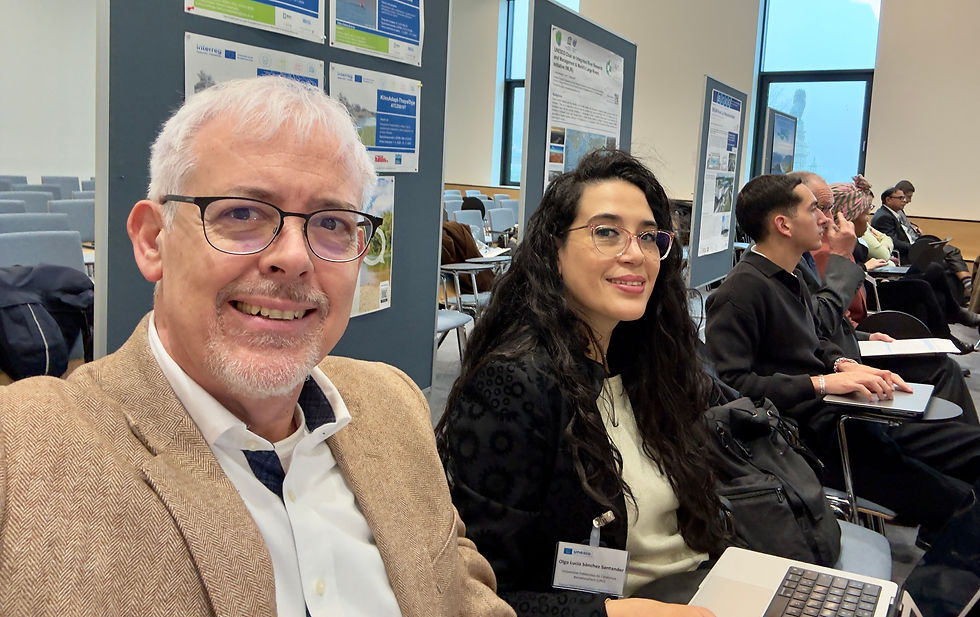
The UNESCO Chair on Sustainability participated through its representatives, Dr. Jordi Morató and Mg. Olga Lucía Sánchez, engaging in the consultation’s sessions aimed at strengthening regional water cooperation.
Results
The consultation reinforced a shared regional agenda around science-based decision-making, stronger cooperation mechanisms and the need for open, interoperable hydrological data to support integrated water resources management at basin scale. The day concluded with a summary of main outcomes and recommendations, together with an outlook for follow-up actions and future IHP Danube activities, underscoring the meeting’s focus on continuity and implementation beyond the event itself.
A guided tour of the BOKU River Lab further highlighted applied, practice-oriented approaches and innovation in hydrological cooperation.
Next steps
Building on the priorities discussed in Vienna, the next steps point toward:
(i) review joint flagship initiatives aligned with IHP-IX
(ii) strengthening coordination and cooperation between National IHP Committees across the region and with UNESCO Chairs and Centres
(iii) accelerating progress toward open, interoperable and accessible hydrological data systems that can directly support basin-level governance and integrated planning. In that sense, the UNESCO Chair on Sustainability establish some bilateral meetings with Prof. Maciej Zelewski from the European Regional Centre for Ecohydrology (ERCE) in Lodz, Poland.


Comments